

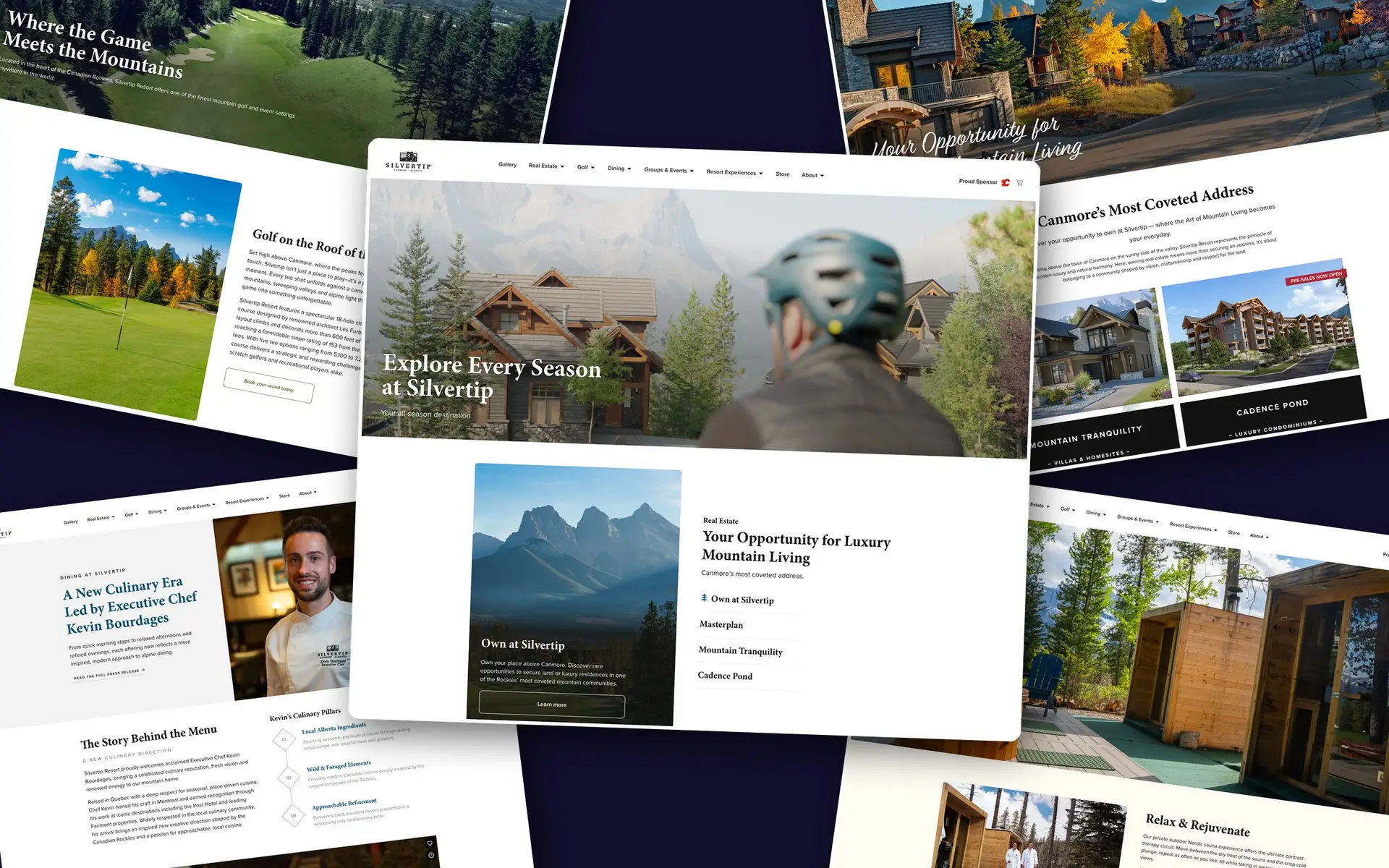
Why Silvertip Resort needed a website rebuild
Before the rebuild, Silvertip’s website had aged along with the business. It ran on a dated WordPress setup with a heavy page builder and a lot of plugins, so it was slow, crashed often and was hard for the client’s team to update. Years of small additions had left the content scattered. Golf alone was split across four separate pages (the course, awards, the practice facility and the golf academy), so visitors had to piece it together themselves.
Borrowing a brand that was already on the shelf
This project came out of work we were already doing. We’d been maintaining Silvertip’s old site and building new pages for a while, and it was clear that patching it wouldn’t last much longer. We recommended a full rebuild, and Stone Creek Resorts agreed. We started with a new sitemap and wireframes, then homepage mockups and a design system based on the brand colors Silvertip already used in print. Golf, dining, real estate and resort experiences each had their own look on paper, but none of it had made it onto the website. Bringing that online gave each section its own identity without inventing anything new. Someone just had to connect the dots.
Rebuilding golf from four pages into one
Once the design was approved, we rebuilt the site on Elementor Pro and moved the client off their old, plugin-heavy setup onto something lighter and easier for them to manage. Most of the content came from the old site and was moved over and cleaned up page by page. We used a script to move the blog posts, but built every new page by hand to fit the new structure. Golf showed the difference best. The four scattered pages became one “About Our Course” page that tells the whole story in one place.
Fixing what made it slow
We also fixed the performance problems at the source. The slowness and crashes came from several small problems, not one big one: a shared server hosting several client sites, a plugin list that had grown for years and a page builder that wasn’t being used efficiently. We upgraded the hosting, cut the plugin count and rebuilt with fewer moving parts. HubSpot forms and CRM connections went in near the end, once the design and structure were locked. We ran QA with the VP of Marketing and her team before launch.
Building for the seasons
Resort sites have a wrinkle most sites don’t: the content changes with the seasons. Golf shuts down in winter and skiing and other cold-weather activities take over, so the page templates had to be flexible. The project also improved our own process. Working in Elementor Pro on a site this size showed us better ways to share templates and reusable pieces across a large site, and we’ve used that on projects since.