


Try this. Open ChatGPT, Gemini, or Google and ask: “Who’s a good [what you do] in [your city]?”
Did your business come up?
More and more people start their search this way. Instead of scrolling through ten blue links, they get a short answer with a handful of names. If you’re not one of them, you’re not even in the running.
The good news: getting into those answers isn’t magic. It mostly comes down to the same fundamentals that have always made a website work, with a few new twists.
How AI tools decide who to mention
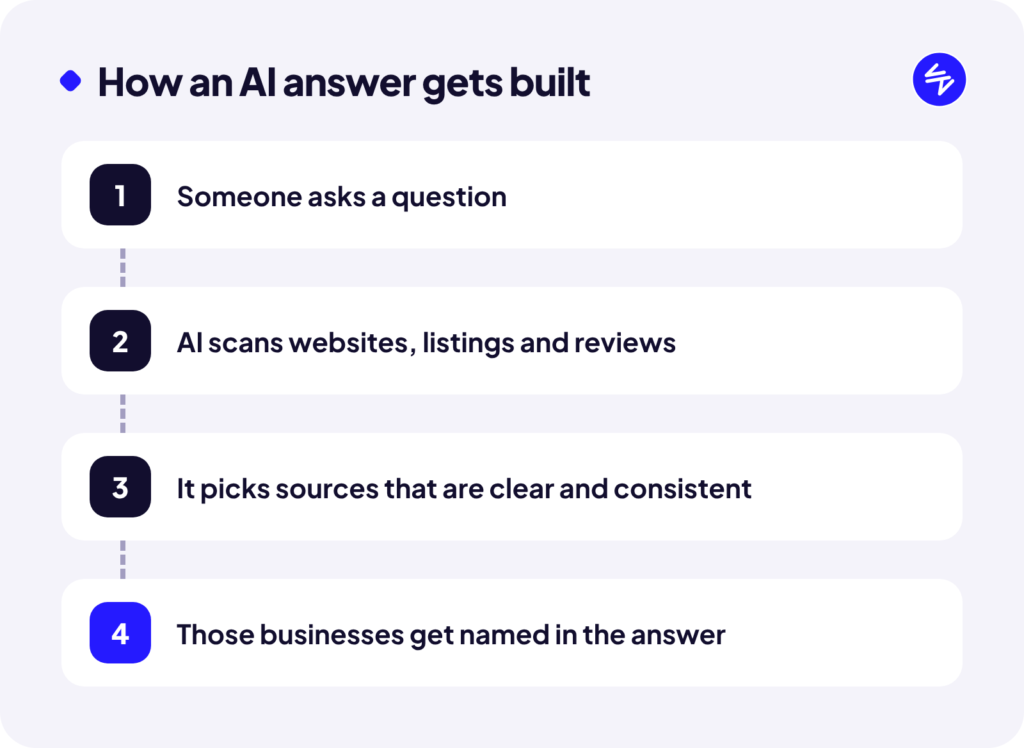
AI assistants pull their answers from what they can find and trust on the web. That includes your website, but also your Google Business Profile, review sites, directories, and anywhere else your business is mentioned.
They’re looking for three things:
- Clarity. Can it tell, quickly and without guessing, what you do, who you do it for, and where?
- Consistency. Does the same information show up in multiple places?
- Credibility. Do other sources (reviews, articles, listings) back up what you say about yourself?
5 things you can do this month
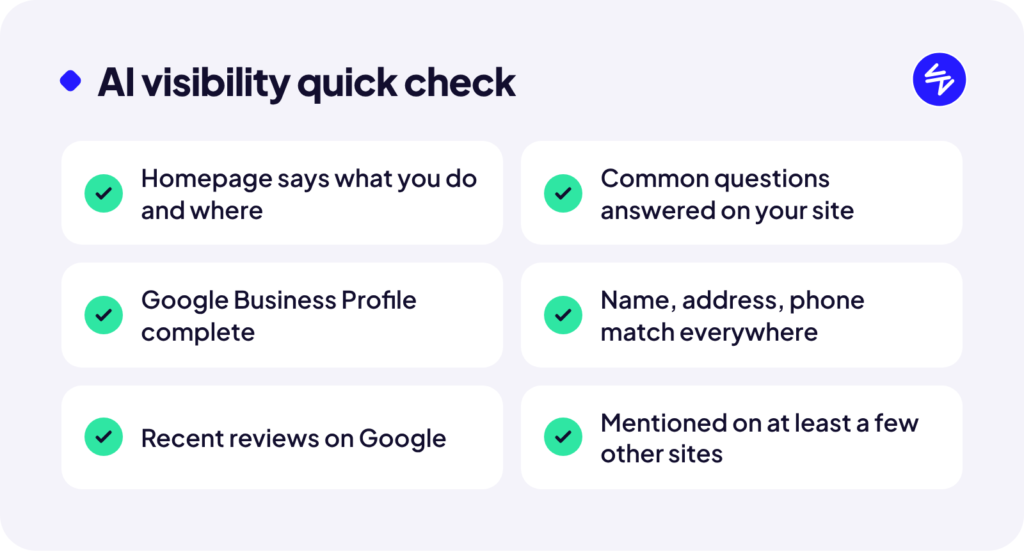
1. Say exactly what you do, in plain words
Your homepage should state, in the first few lines, what you do and who it’s for. “Commercial roofing for Calgary property managers” is something an AI can use. “Elevating spaces, exceeding expectations” is not.
2. Answer real questions on your site
Think about the questions customers ask you on the phone or in emails. How much does it cost? How long does it take? Do you work with businesses my size? Put the answers on your site, in plain language. A solid FAQ section or service pages that address these directly are exactly what AI tools love to quote.
3. Get your Google Business Profile in shape
Your profile is one of the most trusted sources for local information. Make sure your categories, services, hours, and description are complete and current. (We’re covering this in more detail later this year.)
4. Keep your details consistent everywhere
Your business name, address, phone number, and description should match across your website, Google, Facebook, LinkedIn, and any directories. Small mismatches make it harder for AI to be confident it’s talking about the same business.
5. Earn mentions beyond your own site
Reviews, a quote in a local article, a listing in an industry association, a case study on a client’s site. Every credible mention outside your own website helps confirm you are who you say you are.
What about all the new “AI SEO” services?
You’ll see plenty of agencies selling “AI optimization” packages right now. Some are legitimate. Many are repackaged SEO with a new label and a higher price. If someone promises to “get you into ChatGPT,” ask exactly what they’ll change. If the answer is vague, so is the value.
The fundamentals above aren’t flashy, but they’re what actually works, and they help your regular Google rankings at the same time.
Want to know where you stand?
We’re happy to run a few quick searches for your business across the major AI tools and tell you what we find. No pitch deck, just an honest look.